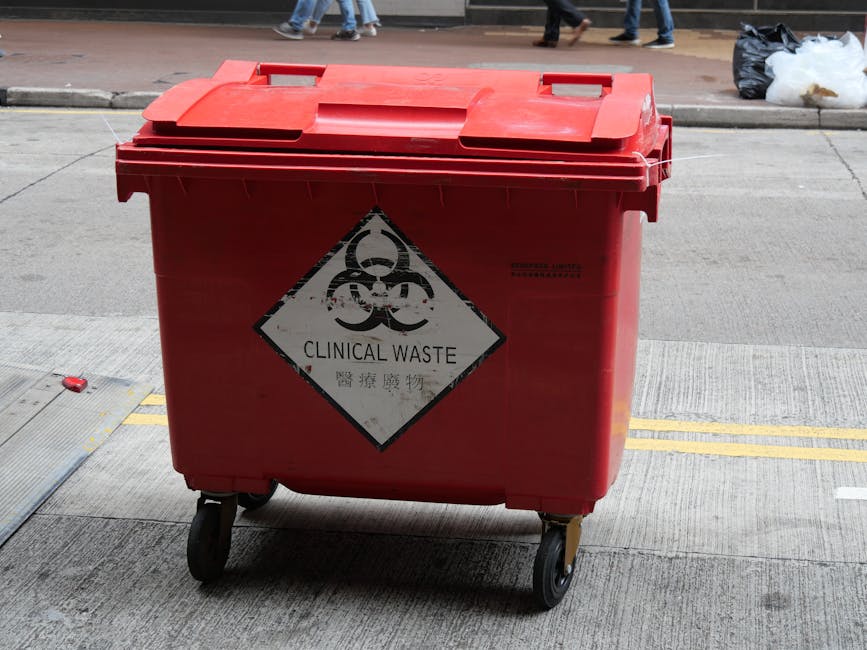
Hazardous waste in Eastham: What Wirral Council requires
If you have a box of old paint tins, a leaking battery, a half-used tube of solvent, or a broken fluorescent bulb tucked away in the garage, you are not alone. Hazardous waste has a habit of lingering. It is awkward, a bit messy, and easy to ignore until it becomes a real problem. This guide to Hazardous waste in Eastham: What Wirral Council requires explains the practical side of dealing with risky household and business waste in a sensible, compliant way.
We will keep it plain-English and local. You will learn what counts as hazardous waste, what the council generally expects, how to sort and store items safely, which mistakes to avoid, and when a professional clearance service makes life easier. If you only remember one thing, make it this: do not mix hazardous items into ordinary rubbish and hope for the best. That is where people get caught out.
Table of Contents
- Why Hazardous waste in Eastham: What Wirral Council requires Matters
- How Hazardous waste in Eastham: What Wirral Council requires Works
- Key Benefits and Practical Advantages
- Who This Is For and When It Makes Sense
- Step-by-Step Guidance
- Expert Tips for Better Results
- Common Mistakes to Avoid
- Tools, Resources and Recommendations
- Law, Compliance, Standards, or Best Practice
- Options, Methods, or Comparison Table
- Case Study or Real-World Example
- Practical Checklist
- Conclusion
- Frequently Asked Questions
Why Hazardous waste in Eastham: What Wirral Council requires Matters
Hazardous waste is not just "stuff you cannot be bothered to bin properly." It is waste that can harm people, property, or the environment if it is handled badly. In a place like Eastham, where homes, flats, small workshops, offices, and gardens all produce different kinds of waste, that distinction matters more than people think.
Wirral Council's requirements matter for three simple reasons. First, safety: some materials can ignite, leak, corrode surfaces, or release fumes. Second, compliance: councils and waste contractors expect residents and businesses to separate dangerous items from general waste. Third, practicality: the right disposal route is often simpler and cheaper than a last-minute scramble after something has gone wrong. Let's face it, nobody wants a sour-smelling drum of leftover paint sitting in a hallway for another six months.
There is also a wider responsibility. Hazardous waste that is dumped with normal rubbish can contaminate other loads, create risks for collection crews, and complicate recycling. That is exactly why councils tend to be careful about how these items are presented, packed, and transferred. A small mistake can turn a straightforward clearance into a much bigger job.
Expert summary: If a waste item can burn, poison, corrode, infect, or react, treat it separately until you have confirmed the right disposal route. When in doubt, isolate it, label it, and seek advice before moving it with normal waste.
How Hazardous waste in Eastham: What Wirral Council requires Works
The basic idea is simple, even if the paperwork sometimes feels less simple than it should. Hazardous waste is normally handled through separation, safe storage, and the correct collection or drop-off route. The council's expectations generally follow that pattern, whether the waste comes from a home clear-out, a landlord void, a small office, or renovation work.
For residents, the process often starts with identifying what the item is and whether it belongs in ordinary rubbish, recycling, or a dedicated hazardous stream. For businesses, there is usually a stronger duty to keep records, use appropriate carriers, and avoid casual disposal altogether. If you run a local business and are also dealing with old desks, packaging, or mixed junk, a service such as business waste removal can help keep the non-hazardous and hazardous parts of the job clearly separated.
In practice, hazardous waste is usually handled in one of a few ways:
- Separated for special collection where the council or a suitable contractor accepts it.
- Stored safely until collection if immediate removal is not possible.
- Delivered through the right channel when the item should not go in general bins.
- Removed as part of a larger clearance if the provider is equipped and authorised to manage the waste stream properly.
That last point is where people often breathe out a bit. If you are already organising a home or office clearance, it can make sense to bundle the wider job with a provider that understands handling, segregation, and transport. For example, a cluttered hallway, a damp garage, or an office store room full of mixed items may be easier to manage as part of a broader home clearance, house clearance, or office clearance, while still keeping hazardous materials apart.
A good rule of thumb: if the item still smells strongly of chemicals, is leaking, is pressurised, or has a warning label you would rather not ignore, it probably deserves extra care.
Key Benefits and Practical Advantages
Following the council's expectations is not just about avoiding trouble. There are real practical benefits.
1. Better safety at home or work
Separated hazardous waste reduces the risk of spills, burns, fumes, and accidental contact. That matters if you have children around, older relatives, tradespeople on site, or staff walking past a storage cupboard every day.
2. Less chance of collection problems
Mixed waste causes headaches. One contaminated bag or box can delay a whole clearance. A tidy, well-sorted pile makes the job smoother from start to finish. You will notice the difference immediately when the collection crew turns up and does not have to play detective with every bag.
3. More sensible costs
When hazardous and non-hazardous items are separated early, you avoid paying a premium for everything to be treated as high-risk waste. That is especially useful in larger clear-outs such as garages, lofts, and sheds.
4. Better environmental outcomes
Some items can be treated, recycled, or processed properly if they are not contaminated by general rubbish. A sensible clearance approach supports reuse and recycling, which is why many people pair hazardous sorting with broader responsible disposal. If sustainability matters to you, see the company's recycling and sustainability approach for the wider waste journey.
5. Less stress
Truth be told, the biggest benefit is often peace of mind. You know what is being removed, how it is being handled, and that you are not leaving behind a hidden risk. That quiet sense of "sorted now" is worth quite a lot.
Who This Is For and When It Makes Sense
This topic is relevant to more people than many assume. Hazardous waste in Eastham is not only a builder's issue or a factory issue. It shows up in daily life all the time.
- Households clearing sheds, garages, lofts, under-stair cupboards, or utility rooms.
- Landlords and agents dealing with left-behind cleaning fluids, paint, aerosols, or damaged appliances.
- Small businesses with old toner cartridges, batteries, office chemicals, or maintenance waste.
- Tradespeople handling sealants, adhesives, solvents, and renovation debris.
- Garden owners with pesticides, treatments, and chemical containers.
It also makes sense when ordinary disposal routes are not enough. For example, a loft full of mixed items may contain some non-hazardous clutter alongside a battery, a couple of old lamps, and a forgotten tin of wood treatment. In that case, a more structured clearance can save a lot of back-and-forth. Services like loft clearance, garage clearance, and garden clearance can be useful if the hazardous items are only one part of a bigger project.
If your issue is mainly furniture or bulky household items with one or two risk items mixed in, it can also help to split the job into sections. Remove what is clean and reusable through a suitable route such as furniture clearance or furniture disposal, then deal with hazardous items separately. That sounds obvious, but in a cluttered room obvious things are not always obvious.
Step-by-Step Guidance
Here is the practical route to follow if you want to stay organised and reduce risk.
- Identify the item. Check labels, symbols, containers, and any visible warning signs. If a product is still in its original packaging, that is helpful. If not, be cautious.
- Separate hazardous from non-hazardous waste. Keep chemicals, batteries, aerosols, oils, and lamps apart from paper, cardboard, fabrics, and general junk.
- Do not decant unless necessary. The original container often gives the clearest information. If you must move it, use a secure, compatible container and label it properly.
- Store it somewhere safe. Keep containers upright, dry, cool, and out of direct sunlight. A garage shelf is better than a damp floor near a heater.
- Check the local disposal route. Councils and contractors may differ in what they accept and how items must be presented.
- Arrange removal or drop-off. Choose the route that best fits the item type, quantity, and timing.
- Keep records if you are a business. Notes, receipts, and transfer details matter more than most people expect.
If the waste forms part of a larger office or premises clear-out, you may prefer a full-service approach that covers the bulk removal and leaves hazardous items to be managed separately and correctly. A local provider offering waste removal can be a useful starting point when the job is not neatly limited to one category.
One small but important practical point: never leave hazardous items loose in black bags "just for now." That is the sort of thing people say while carrying a mug of tea and trying to find the right cupboard. It usually ends badly.
Expert Tips for Better Results
These are the habits that make a real difference.
- Label unclear containers immediately. If you are not sure what is inside, write down what you do know: where it came from, roughly when it was bought, and what it smells or looks like.
- Keep batteries taped at the terminals if advised. This can reduce the chance of short-circuiting. Use common sense here; if you are unsure, do not improvise wildly.
- Bundle like with like. A small number of grouped items is easier to manage than a scatter of random containers.
- Think about access. If a contractor has to climb three flights of stairs or squeeze through a narrow side gate, tell them beforehand. It saves time and awkward lifting.
- Plan around other clearances. If you are already booking a larger project, line up the hazardous items with the rest of the work so nothing gets forgotten at the back of the shed.
In our experience, the smoothest jobs are the ones where the customer has done a little pre-sorting. Not a full industrial-level system. Just enough order to prevent the "what on earth is this?" moment. That tiny bit of prep can shave a lot of hassle off the day.
Common Mistakes to Avoid
A few mistakes come up again and again.
- Mixing hazardous waste with ordinary refuse. This is the big one. It can create safety risks and may lead to the whole load being rejected or treated differently.
- Assuming every old item is harmless. Some products stay risky long after the original use is forgotten.
- Storing containers near heat or moisture. Damp garages and hot boilers are not ideal companions for chemicals.
- Leaving lids loose. Spills happen when containers tip, crack, or evaporate.
- Using unapproved disposal routes. A shortcut today can become an expensive cleanup tomorrow.
- For businesses, failing to keep transfer details. That paperwork may feel dull, but it matters if anyone asks what happened to the waste.
There is also the "I'll deal with it later" mistake. Which, honestly, is the most human mistake of all. But with hazardous waste, later is often worse than now.
Tools, Resources and Recommendations
You do not need specialist kit for every item, but a few practical tools make safe handling easier.
- Sturdy gloves for light handling, especially with dirty containers or broken packaging.
- Seal-able tubs or boxes for grouping small items like batteries, bulbs, and small cans.
- Labels or marker pens so you can identify what is inside at a glance.
- Absorbent material for containing minor leaks in a temporary storage area.
- A torch for checking dark corners, lofts, and cupboards where old tins like to hide.
For bigger clearances, it may help to coordinate hazardous waste management alongside the removal of bulky items. A property full of mixed contents can be tackled more efficiently if the main clearance is handled in phases. For instance, you might remove office furniture through office clearance and then isolate the hazardous leftovers for separate handling. Likewise, a domestic declutter may combine home clearance with careful sorting of restricted items.
Practical recommendation: Keep one "do not bin yet" box in the property whenever you are decluttering. It should hold uncertain items until they are identified properly. That one box can prevent a lot of guesswork.
Law, Compliance, Standards, or Best Practice
This is the part where caution matters. Hazardous waste is a regulated area, and while the precise obligations depend on whether you are a householder or a business, the safest approach is always to treat dangerous items as a separate waste stream.
For households, the main expectation is simple: do not place hazardous items in normal bins unless you know they are accepted there. Follow local collection instructions, packaging requirements, and separation advice. For businesses, the duty is stronger. Waste should be transferred responsibly, and records should be kept where required. A business should not guess, wing it, or hand over waste casually to whoever happens to have a van. That is not best practice, and it can become a problem quickly.
Good compliance habits include:
- checking what the item is before disposal
- keeping hazardous waste apart from general waste and recycling
- using appropriate containers and secure storage
- choosing a competent waste carrier or authorised disposal route
- retaining any paperwork or transfer information where relevant
If you are managing a renovation or minor building project, it is worth keeping hazardous waste separate from builders' rubble and mixed debris. A service such as builders waste clearance can help with the non-hazardous side of the job, but hazardous materials still need their own careful route. That split sounds a bit fussy until you are standing in a hallway with dust, tubs, and half-open boxes everywhere.
Best practice also means safety first: do not crush containers, do not mix unknown liquids, and do not assume that empty means harmless. Sometimes the residue is the risk.
Options, Methods, or Comparison Table
Different disposal routes suit different situations. This comparison gives you a quick way to think it through.
| Option | Best for | Pros | Watch out for |
|---|---|---|---|
| Separate home sorting | Small amounts of batteries, bulbs, cans, and cleaners | Low-cost, simple, good for light decluttering | Needs careful labelling and safe storage |
| Council-guided disposal | Residents who need the correct local route | Clear compliance path, suitable for common household items | Acceptance rules may vary by item type and timing |
| Professional clearance support | Mixed loads, larger properties, time-sensitive jobs | Less hassle, better segregation, easier lifting and transport | Choose a provider that understands hazardous separation |
| Business waste management | Offices, shops, trades, landlords | Better records, repeatable process, cleaner compliance | Requires ongoing organisation, not just one-off dumping |
To be fair, there is no one perfect method for every case. A couple of batteries is not the same as a garage full of chemical containers, and an office move is not the same as a domestic tidy-up. The right choice depends on quantity, risk, and how much physical work you want to take on yourself.
Case Study or Real-World Example
Here is a realistic example based on the kind of situation people in Eastham often face.
A homeowner begins clearing a garage on a wet Saturday morning. There are boxes of old tools, paint tins from a half-finished decorating job, a broken lamp, a few batteries, and several bottles of garden treatment left from years back. At first glance it looks like one job. In practice, it is three: general clutter, bulky items, and hazardous waste.
The sensible move is to sort the garage into piles. Reusable furniture and bulky bits are separated for disposal. Non-hazardous junk is set aside for collection. Then the risky items are grouped together, checked for labels, and stored safely away from children and pets. Once the main clearance is underway, the homeowner can deal with the hazardous items through the correct route rather than trying to squeeze them into the same load.
The result is a cleaner space, less confusion, and no last-minute panic because a leaking tin has been buried under a pile of old newspapers. That sort of thing happens more than people admit. By Sunday evening, the garage smells less like damp cardboard and old solvent, and a decent chunk of the stress has gone too.
This same logic applies to flats, lofts, and offices. A mixed clearance becomes manageable when the hazardous pieces are identified early.
Practical Checklist
Use this checklist before arranging disposal or collection.
- Have I identified every item that might be hazardous?
- Are liquids, powders, batteries, bulbs, aerosols, or chemicals separated from general waste?
- Are containers closed, upright, and labelled?
- Is the storage place dry, cool, and away from heat sources?
- Have I checked whether the item belongs in a specialist or council route?
- If this is a business, have I kept the relevant records?
- Have I separated bulky non-hazardous items from the hazardous ones?
- Do I know who is collecting it, and what they will accept?
- Have I avoided mixing unknown substances?
- Is there anything I should set aside for a second look rather than rushing it out?
If you can tick most of those boxes, you are already in a much better place than most people on a typical decluttering day. Not perfect. Just organised enough, which is usually what matters.
Get a free quote today and see how much you can save.
Conclusion
Hazardous waste in Eastham needs calm handling, a bit of judgement, and the right disposal route. Wirral Council's expectations, like most sensible local waste rules, are there to keep people safe and prevent mixed waste from causing bigger problems later. Once you separate hazardous items from general rubbish, the rest of the job gets easier almost immediately.
The key is not to overcomplicate it. Identify the risky items, store them properly, keep them away from everyday waste, and choose the right collection or disposal method. If your clear-out is larger or involves mixed contents, it often makes sense to pair the hazardous side with a broader clearance plan so nothing is left to chance. You do not need a perfect system. You just need a safe one.
And if you are standing in a half-cleared room wondering where to begin, start with the obvious: the leaking tin, the loose battery, the old bulb. Small steps. That is usually how these jobs become manageable.
Frequently Asked Questions
What counts as hazardous waste in a typical Eastham home?
Common examples include batteries, solvents, paint, aerosols, fluorescent tubes, pesticides, oils, and certain cleaning products. The main clue is whether the item can burn, leak, corrode, react, or cause harm if handled badly.
Can I put hazardous waste in my normal bin?
Usually, no. Hazardous items should be kept separate unless you have confirmed that a specific item is accepted in your local disposal route. Mixing it with general rubbish is risky and can create collection problems.
Do I need to label hazardous waste before storing it?
If the original packaging is missing or unclear, yes, a simple label helps a lot. Even a handwritten note with the item type and source can reduce mistakes and keep everyone safer.
How should I store hazardous waste before collection?
Keep it upright, closed, dry, cool, and away from children, pets, and heat sources. A stable shelf or tray is better than a damp floor or a crowded corner.
What should businesses in Eastham do differently?
Businesses should be stricter about segregation, storage, and records. Waste should be handled through a compliant route, and transfer details should be retained where needed. The process should be deliberate, not casual.
Are old batteries and light bulbs considered hazardous?
Often, yes, they need separate handling. Batteries can short-circuit or leak, and some bulbs contain materials that require special treatment. They should not be thrown in with ordinary rubbish.
What if I do not know what is inside a container?
Do not guess. Keep it separate, do not open it unnecessarily, and set it aside for identification. Unknown substances deserve caution, even if the container looks harmless.
Can hazardous items be included in a house clearance?
Sometimes they can be handled alongside a broader clearance, but they still need to be identified and separated properly. A general house clearance is not a licence to mix dangerous materials into the load.
How do I know whether I need a professional waste removal service?
If the waste is bulky, mixed, awkward to move, or includes items you are not confident about, professional help is usually worth considering. A service such as waste removal can reduce the physical effort and help with safer sorting.
What is the biggest mistake people make with hazardous waste?
The most common mistake is leaving it mixed in with ordinary clutter because it seems easier in the moment. That shortcut can create safety issues, collection delays, and extra work later. A little sorting now saves a lot of trouble.
Should I keep receipts or paperwork after disposal?
If you are a business, yes, absolutely. For households, it is still sensible to keep any collection confirmation or note if you have arranged a specialist disposal route. Paper trails are not glamorous, but they help.
Where should I start if my garage, loft, or office is full of mixed waste?
Start with separation, not lifting. Identify the hazardous items first, set them aside safely, and then deal with the bulky or reusable parts. If the job is bigger than you expected, a structured service such as garage clearance, loft clearance, or office clearance can make the process much smoother.